8 Days Heritage Of Morocco Imperial Tour From Casablanca.
General Overview :
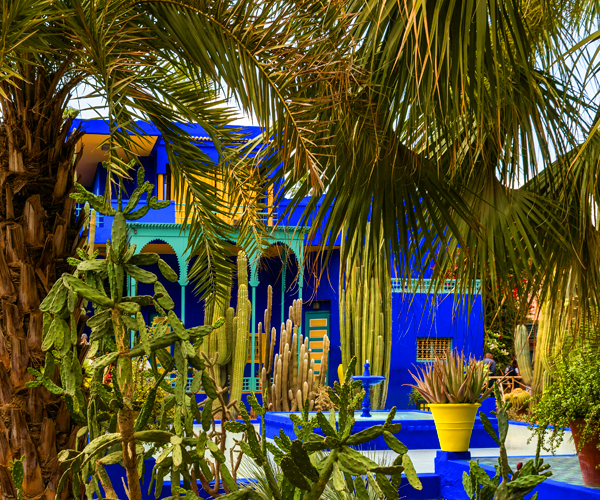
The heritage of Morocco is evident across the whole country, with the ancient medinas of the main cities that have retained their look and feel over the centuries, with bustling markets of colorful spice stalls, leather tanning in the streets, and teahouses; Chefchaouen with its unique charm gives an impression of unreality. With its blue-rinsed houses, the whole city seems to be bathed in azure. You walk around as if you were in a dream.
Tour Highlights :
- Visit the gorgeous mosque Hassan II in Casablanca.
- Explore the administrative capital Rabat.
- Visit the beautiful and fascinating blue city of Chefchaouen.
- Wander through the ancient Medina of the Imperial city Fez.
- Explore Morocco’s stunning architecture.
- Taste delicious traditional dishes of Moroccan local cuisine.
- Explore the highlights of Marrakesh on a city tour to imperial Morocco landmarks.
- Embrace the whirlwind of activity in the vibrant Jemaa el-Fna night market.
Inclusions :
- Private air-conditioned vehicle at disposal.
- All transfers from airport Pick-Up to Drop Off.
- Private English-Speaking driver throughout your trip.
- 07 nights’ accommodation in the category of hotel chosen.
- Daily breakfast.
- Dinner as mentioned in the itinerary.
- Sightseeing by English Speaking local tour guides in Chefchaouen, Fez & Marrakech.
- Hotel Taxes.
Exclusions :
- Airfare tickets.
- Lunches.
- Dinner as mentioned in the itinerary.
- Drinks.
- Entrance fees to the monuments & Museums.
- Optional activities.
- Tips.
Travel Tips :
- Explore Tangier the gateway to Africa with its blend of cultures and unique influences.
- Explore the blue-washed streets of Chefchaouen, which is irresistibly photogenic. Discover the medina cast in shades of azure and aquamarine.
- Explore hundreds of years of history as you tour the important imperial cities of Rabat, Fes, Marrakesh and Meknes.
- Have a unique sensory experience in Fes, watching the dyeing skills of tanners on display as they use age-old techniques to soak and dye skins.
- Travel through the High Atlas Mountains; enjoy the lush forest area and the sight of Berber homes.
- Explore hundreds of years of history as you tour the important imperial city of Marrakesh.
- Feel the unique pulse of Africa in the mythical Djemaa el Fna square of Marrakesh where snake charmers, acrobats and storytellers breathe in the sweet aromas of spices wafting through the air.
01
DAY 1: ARRIVAL TO CASABLANCA - RABAT
8 Days Heritage Of Morocco Imperial Tour From Casablanca
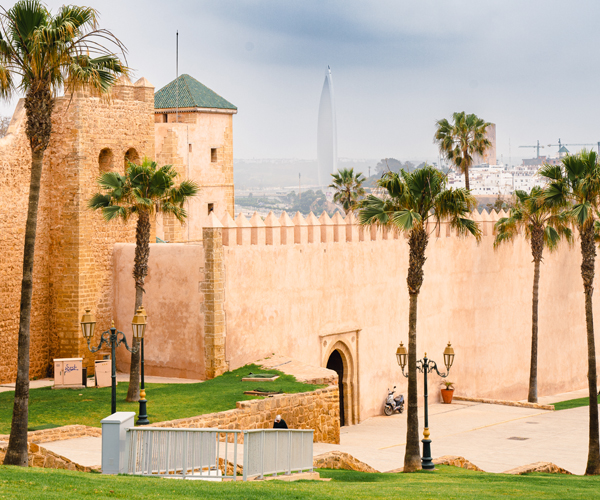
Today, embark on one of our captivating Morocco vacation packages as we invite you to join us on an 8-day tour to discover the magical Morocco. Upon arrival to Casablanca airport, you will meet our English-speaking driver who will provide a brief overview of your tour. Then, drive to the main capital of Morocco Rabat where you will have the opportunity to visit its must-see sites including the unfinished mosque tower of Hassan dated back to the 12th century. You will also visit the mausoleum of Mohamed V, built by the former King Hassan II and dedicated to his father, Mohamed V, for honoring him as the father of independence. You will visit the 12th century Kasbah of Oudaya with its beautiful white and blue buildings with a fantastic view over the Atlantic beach and Bouragrag River. Check in at the hotel or Riad for the overnight with dinner.
• Driving distance: Approximately 100 Kilometers.
• Estimated driving duration: 1hr 30 min (without traffic).
• Accommodation: Overnight stay at a hotel/Riad in Rabat.
• Meals: Dinner included.
02
DAY 2: RABAT - CHEFCHAOUEN
8 Days Heritage Of Morocco Imperial Tour From Casablanca
Today we leave the coastal capital city of Rabat where the treasures of the past blend with the most modern and we will travel north to the blue washed town of Chefchaouen means "two horns"—a reference to the twin peaks that tower over this small hillside town in northern Morocco. Locals call it Chaouen, but many travelers know it affectionately as "The Blue City." Today you will explore this authentic town with a special vibe. Its unique charm gives an impression of unreality. With its blue-rinsed houses, the whole city seems to be bathed in azure. You walk around as if you were in a dream. This beautiful Chefchaouen brims with attractions. Its heritage is rich. The inescapable Medina with its famous narrow winding alleys, is an opportunity to mingle with the local population, and to smell and taste delights: from freshly baked bread to skillfully prepared tagines. There is also the Kasbah which stands in the middle of the old quarter: its lush gardens, located in the center of the city, are a haven of freshness. Its museum, which is home to a collection of old weapons, some photos of the city, and textiles, is must-see. Chefchaouen is a paradise for walkers. The paths of the surrounding mountains offer pleasant hiking activities. The town has rapidly gentrified and offers a range of quality accommodation, good food, lots to do and no hassles to speak of, making it a strong alternative to a hectic multicity tour. Spend the overnight with dinner at the hotel.
• Driving distance: Approximately 255 Kilometers.
• Estimated driving duration: 4hrs 00 min (without traffic).
• Accommodation: Overnight stay at a hotel/Riad in Chefchaouen.
• Meals: Dinner & Breakfast included.
03
DAY 3: CHEFCHAOUEN - VOLUBILIS - MEKNES - FEZ
8 Days Heritage Of Morocco Imperial Tour From Casablanca
Today we leave Chefchaouen towards Volubilis sitting in the middle of a fertile plain; the ruined Roman city is the best-preserved archaeological site in Morocco. Its most amazing features are the many beautiful, preserved mosaics, and it was declared a UNESCO World Heritage site in 1997. The city of Volubilis was an important settlement for the Roman Empire in the 1st century AD, serving as one of the most southwestern outposts. So, prepare to immerse yourself in the ancient world for the next few hours. We continue to the imperial city of Meknes where you will admire the ornamented gate of Bab Mansour, one of the enormous gates that mark the entrance to the old city through the fortified walls. You will stroll Place Hedim, the main square in the old part of the city. You will visit the mausoleum of Moulay Ismail, the ruler who created the imperial city of Meknes. You can walk around this lavishly decorated part of the inner mausoleum and look into the room where Moulay Ismail was laid to rest. One of the interesting sites also in Meknes is Heri-Sounai Granaries; the site is made up of two main areas. The first is the interior part which was used to store huge amounts of grain. The exterior part of the complex also has rows of stone arches, but it was used to as a royal stable to keep horses and other animals. We reach Fez for the overnight with dinner at the hotel.
• Driving distance: Approximately 250 Kilometers.
• Estimated driving duration: 4hrs 00 min (without traffic).
• Accommodation: Overnight stay at a hotel/Riad in Fez.
• Meals: Dinner & Breakfast included.
04
DAY 4: FEZ SIGHTSEEING TOUR
8 Days Heritage Of Morocco Imperial Tour From Casablanca
Today you will explore the mystical and magical Fez, a remarkable UNESCO world heritage site, and home to the oldest and largest medina in North Africa! The city was once the capital of Morocco and is still widely viewed as the cultural epicenter of the country. The city remains Morocco's spiritual heart thanks to the strong ties to religious schools and Islamic scholars. Its car-free medina has also remained a crossroads for trade and a center for teaching the traditional tradecrafts of Morocco such as intricate woodcarving, zellige tilework, and hand wrought metalsmithing. Your guided tour will start from the Royal Palace admiring its seven imposing front gates, surrounded by fine tilework and carved cedar wood. Built in the 1960s, they're masterpieces of modern craft work. You visit Medersa Bou Inania, the most architecturally refined of Fez’s theological colleges was built by the Merinid sultan Bou Inan between 1351 and 1357. You will visit Nejjarine Museum of Wooden Arts & Crafts wonderfully restored early-18th-century funduq (inn used by caravans), the former rooms for travelling merchants are given over to displays of fine woodwork from across Morocco. You will explore Chouara Tannery, one of the city’s most iconic sights operating since at least the 16th century. Visit the Jewish quarter, Mellah created in 1438, the first official Jewish district. At its peak, some 250,000 Jews lived in the area south of Bab Semmarine. Today, the remaining handful have moved to the Ville Nouvelle, but it's still interesting to see traces of the community in the buildings. Here in the Mellah you will see Ben Danan Synagogue built in the 17th century to serve the megorashim (Jews descended from those expelled from Spain), this synagogue is trimmed in pretty herringbone green tiles, turquoise octagonal pillars and glowing chandeliers. The rest of the day is at leisure to relax at your hotel and spend the overnight with breakfast.
• Driving distance: No distance.
• Estimated driving duration: No duration.
• Accommodation: Overnight stay at a hotel/Riad in Fez.
• Meals: Breakfast included.
05
DAY 5: FEZ - IFRANE - AZROU - BENI MELLAL - MARRAKECH
8 Days Heritage Of Morocco Imperial Tour From Casablanca
Today after breakfast at the hotel in Fez, we take a fascinating journey south to Marrakech. We climb higher into the hills of the middle Atlas, Giant cedar forests, volcanic mountains, strings of lakes and plains producing oranges, olives and sugar cane and French roadside restaurants reminiscent of Provence. Dotted throughout the meadows are small-tented communities of nomads, settled for the summer where the grass is plentiful for their animals. En route, there is also a chance to see unusual wildlife, including the endangered Barbary ape, probably brought here from Gibraltar. The scenery is quite spectacular as the road begins its inexorable descent. We arrive to Marrakech to check in at the hotel for the overnight with dinner.
• Driving distance: Approximately 550 Kilometers.
• Estimated driving duration: 8hrs 00 min (without traffic).
• Accommodation: Overnight stay at a hotel/Riad in Marrakech.
• Meals: Dinner & Breakfast included.
06
DAY 6: MARRAKECH SIGHTSEEING TOUR
8 Days Heritage Of Morocco Imperial Tour From Casablanca
Welcome to Marrakech, Africa’s Capital of Culture, which will encapsulate you with colorful sights, sounds and smells as soon as you enter. Here, everyone and everything is on the move. It is a city of immense beauty, and its fabulous palaces, bustling souks, and lush palm groves continue to exercise a powerful grip over tourists. Undoubtedly, Morocco’s most intoxicating city, it’s impossible not to be captivated by Marrakech’s vibrant colors, heady scents, and inimitable feel. Although it is fairly a big city, most of the must-see attractions in Marrakech can be found at or within walking distance of the medina (historic center). Walking is the best way to discover its many hidden gems and appreciate the true charm of Marrakech. Within the madness of medieval Medina, experience the exotic charm and traditional way of life, that has nourished Marrakech for over a millennium. Delve into a labyrinth of hustle and bustle, haggle for treasures, gaze upon starry mountains, and uncover the delights tucked away in this North African destination. The highlights to see and explore are The Koutoubia Mosque, Marrakech’s most important mosque and one of the largest houses of worships for followers of Islam when completed in 1158. Visit The Bahia Palace, one of the most beautiful palaces in Marrakech built in the late nineteenth century and is a must-see attraction. The Ben Youssef Madrasa was the largest and most important Islamic school in Morocco. It has over 130 rooms and houses over 900 students. The souks of Marrakech’s medina are a maze of market stalls where the vibrant colors blend with the smell of spices and shouts of merchants. Spend the overnight with breakfast at the hotel.
• Driving distance: No distance.
• Estimated driving duration: No duration.
• Accommodation: Overnight stay at a hotel/Riad in Marrakech.
• Meals: Breakfast included.
07
DAY 7: MARRAKECH - CASABLANCA
8 Days Heritage Of Morocco Imperial Tour From Casablanca
Today we will drive back to Casablanca, the largest metropolis and commercial hub of Morocco. You will visit the stunning Hassan II Mosque; the huge building is part on land and part on ocean and can accommodate 25,000 worshipers; its minaret stands as the tallest religious structure in the world. Afterwards, you will have a smooth walk at La Corniche to catch your breath and to admire the serenity of the Atlantic Ocean. Spend the overnight with breakfast at the hotel.
• Driving distance: Approximately 245 Kilometers.
• Estimated driving duration: 3hrs 00 min (without traffic).
• Accommodation: Overnight stay at a hotel in Casablanca.
• Meals: Breakfast included.
08
DAY 8: CASABLANCA - BACK TO THE AIRPORT
8 Days Heritage Of Morocco Imperial Tour From Casablanca
Today marks the end of your memorable Journey to Morocco. You will have enjoyed an off-the-beaten-path exploration of Morocco, and the rich culture and history found here. It is time to bid farewell to this enchanting country and cherish the memories of your time here. Wishing you a safe and comfortable journey back home.
-
NOTE
NOTE : Bear in mind that this is just a tour itinerary suggestion, if it does not match what you are looking for, please do not hesitate to contact us. We will organize a different itinerary based on your preferences and your stay duration. We offer customized and tailor-made tours and trips all around Morocco.
The price varies according to the number of people traveling, the more people joining the tour the less the price gets. Since the transportation payment is fixed, the price will be divided according to the number of travelers. The price depends on the quality and category of the accommodation. Contact Us for an exact quote.