Book Shopping Tours In Morocco To Immerse Yourself In The Country’s Rich Cultural Heritage And Traditions.
Shopping Handicrafts In Morocco :
Moroccan crafts are a fundamental part of Moroccan life. Moroccan cooperatives have been working wood, metal, copper, wool, linen, stone, and clay into distinctly Moroccan products for centuries. Although Morocco has developed and modernized in many ways, Moroccan arts and crafts are still produced in the traditional ways. Traditional craftsmanship is still highly valued in Moroccan culture.
Exploring the souks of Fez and Marrakech is like walking down the corridors of time. More is revealed the more you delve, for it is in the hidden fondouks and courtyards off the main drag that traditional crafts and industries thrive in ways that have barely changed since Andalusian refugees introduced them over 1,000 years ago.
What To Shop In Morocco :
MARQUETRY :
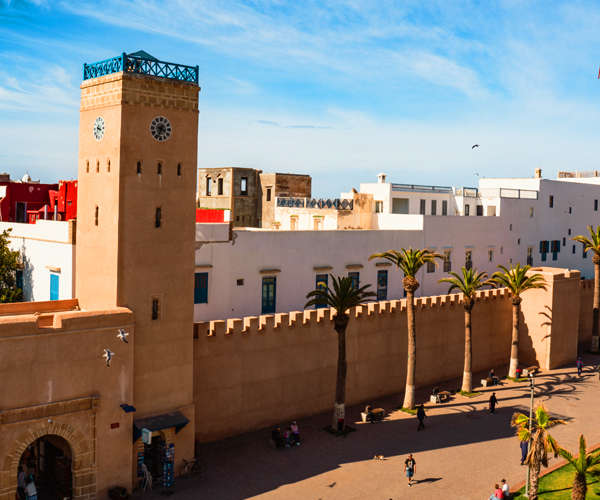
Marquetry is another traditional craft: wooden furniture, ornaments, chess sets, and small wooden boxes made in cedar, thuya and oak, as well as boxes and mirror frames inlaid with camel bone. Many wooden goods are inlaid with veneers or mother of pearl. Often the quality of finish is less than ideal: hinges are points to watch. The woodworkers’ ateliers at Essaouira are an ideal place to buy (and to watch the manufacturing process).
METALWORK :
Metalwork ranges from copper or brass items such as trays with fine, ornate hammered designs (which, along with a small folding wooden stand, make attractive tables) to wrought-iron and pierced copper or brass lanterns, mirror frames and tables with tiny hand-carved zellige-tile inlaid tops. There is also custom-made, contemporary designer furniture which is in good supply in Marrakech’s ironworkers’ souk near Madrassa Ben Youssef.
CARPETS :
First and most prominent of the handicraft traditions are carpets and rugs, hand-knotted and in some cases, still colored with vegetable dyes. Designs (apart from the Turkish-inspired patterns of Rabat carpets) are predominantly traditional to Berber tribes. Their colors and symbolic motifs enable experts to pin down not only the area in which a carpet was produced but sometimes the tribe or even family that made it. Top-quality carpets sell for thousands of dirhams; more affordable and easily portable are Berber rugs, kilims or blankets. Try the small country souks around Marrakech.
LEATHER :
Leather goods are widespread, from unpolished leather bags and belts to distinctive pointed slippers (babouches) and ornate pouffes, studded and dyed. Some leather goods are finished in a style closer to Italian designer luggage. In all cases, price should go hand in hand with quality, so check the hide and workmanship before buying. Printed boxes and bookbinding’s have become the victims of their imitators and too often look tacky.
JEWELLERY :
Jewellery is available for sale everywhere, although one of the best places to buy it is in Tiznit’s famous silversmiths’ souk and in the souks of Taroudant, Essaouira and Marrakech. Dull silver is the basic material: heavy but beautifully decorated bracelets, delicate filigree rings, chunky necklaces of semi-precious stones (or occasionally of plastic, for the unwary) are most found. Slightly more unusual, and sometimes antique, are decorated daggers, scabbards, or Qur’an boxes, covered with silver-wire decoration. The fastenings are often a weak point. Beware, too, of silver-plating masking what the Moroccans call b’shi-b’shi – meaning rubbish.
POTTERY :
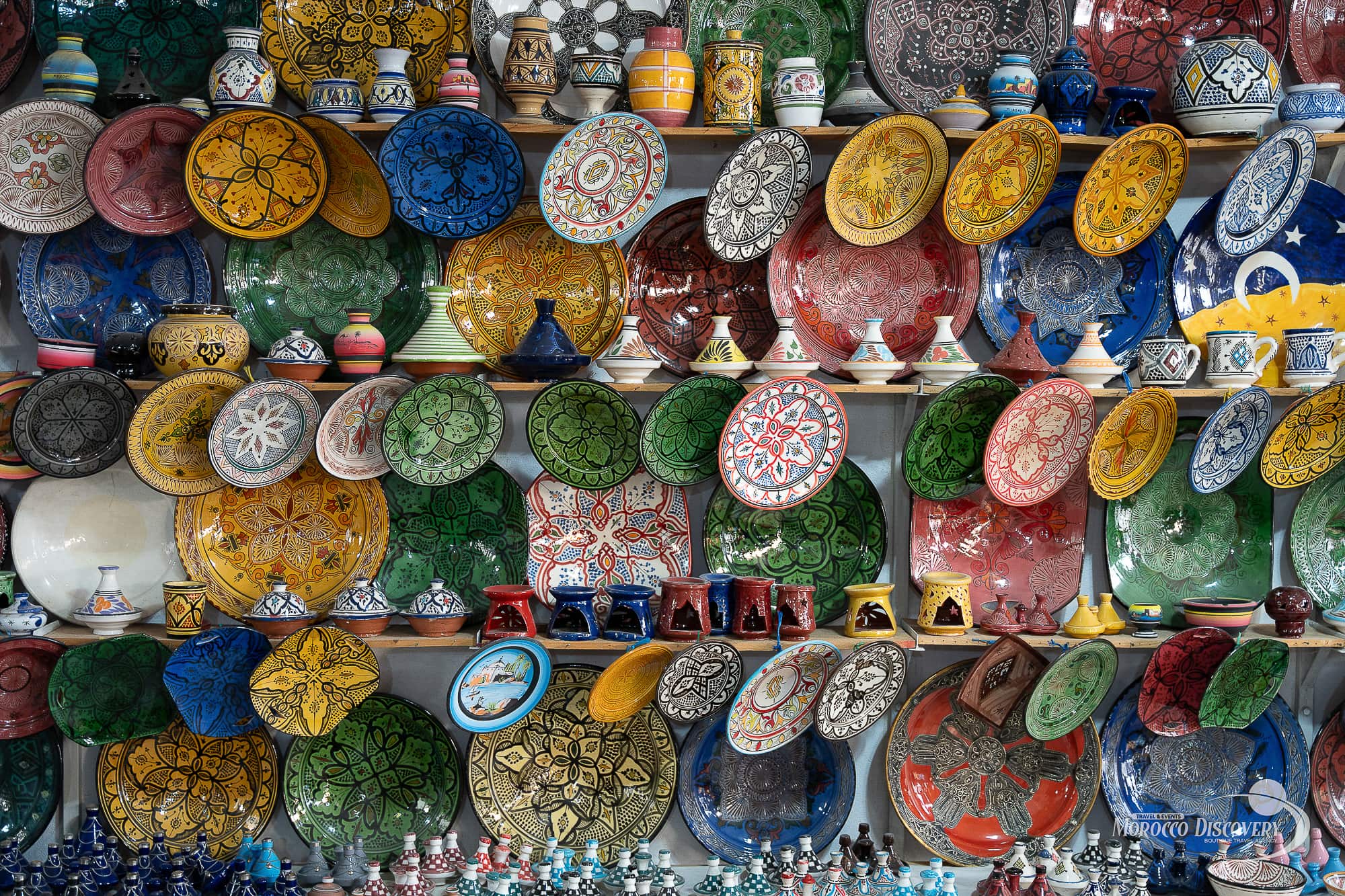
Pottery ranges from the rough earthenware of household pots and crocks to gaudy (and predominantly tourist-orientated) designs and beautiful blue and white, green or colored ceramics from the main pottery centers of Safi, Fez, Meknes and Salé. Marrakech and Essaouira both have extensive pottery souks. The more refined, detailed (and expensive) pieces usually come from Fez, while Safi is famous for its dark-green-colored pieces. In Marrakech you can find almost anything, including modern takes on traditional designs.
WOODWORK :
Woodwork such as boxes and turned containers made of thuya, a lavishly grained, aromatic wood that grows only on the Atlantic Coast, is what Essaouira is famous for. Elaborately painted wood is also a Moroccan tradition: look for ornate painted mirror frames and hanging wall shelves of all sizes.
EMBROIDERY :
If you’ve ever visited Morocco, you most likely came across the beautiful Moroccan embroidery displayed in the medina’s tiny shops. Before the twentieth century, Moroccan girls were taught embroidery by their mothers to generate an income to their families. Nowadays, this art is no longer taught as much as it used to be but that didn’t stop the embroidery lovers to help flourish this art and made it a wildly known Moroccan cultural tradition. The Moroccan hand embroidery was influenced and inspired by the henna designs and Berber tattoos.
A shopping tour in Morocco is a great way to immerse yourself in the country’s rich cultural heritage and traditions, and to take home unique and authentic souvenirs. Also, each region has its unique products and traditions.
To Book your Shopping Tour, Contact Us